Craft Fair Gold: Reviewing the Crescent Moon Earrings Embroidery Design
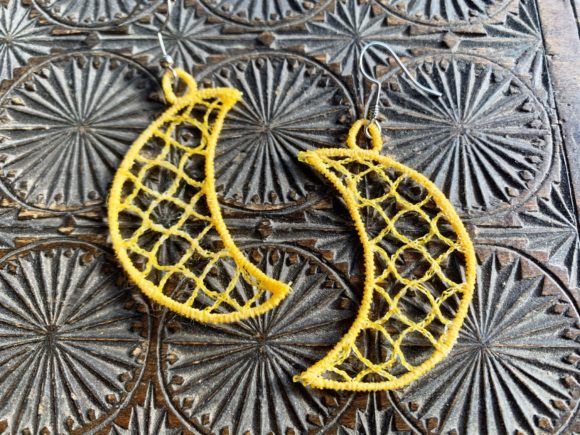
As a professional embroidery designer preparing for a weekend craft fair, my first task is to sift through my digital files and choose designs that will translate into products that sell. Today, I’m evaluating the Crescent Moon Earrings machine embroidery design. From the description, we know it’s a free-standing lace (FSL) piece intended for jewelry, but its potential is far wider. Let’s judge it for real-world craft fair use.
First Impression & Market Fit
The Crescent Moon Earrings design immediately lands in a sweet spot: it feels both modern and mystical. It’s not rustic or farmhouse; it leans into a soft, elegant, and decorative aesthetic with a touch of whimsy. This is a huge advantage. It can appeal to customers looking for minimalist, celestial-themed accessories, a trend that has steady traction. In a booth crowded with tote bags and aprons, a delicate, lace crescent moon will stand out precisely because it’s different—it’s not a large, dense graphic. It feels premium and giftable.
Product Application: Where Does It Shine?
The description suggests using it as earrings, a pendant, or a charm. This is a fantastic start for a small shop product. But for a craft fair booth, we need to think broader. An FSL design like this is versatile. Let’s walk through the display table.
First, as intended, making actual earrings or pendants creates a high-value handmade product. They can be displayed on a simple card or in a small jewelry box, instantly elevating your booth’s perceived craftsmanship. However, don’t stop there.
Beyond Jewelry: Embroidery as an Accent
This design can be stitched onto, not just as, products. Its delicate, lace nature makes it a perfect small accent on larger items. Consider stitching it onto the corner of a fabric pouch, the strap of a market bag, or the hem of a tea towel. On a solid-colored tote bag, a single crescent moon near the pocket adds a subtle, stylish touch without overwhelming the bag. This approach turns it from a niche jewelry item into a scalable craft fair product for multiple categories.
As an embroidered patch, it could be applied to caps or jackets, though care is needed due to its FSL, open structure—a solid stabilizer behind it would be crucial. On a pillow cover, a cluster of small crescent moons could create a beautiful, repeating pattern. The key is recognizing its role: it’s a decorative element, not a large focal design. It works best when its intricate details are preserved.
Practical Production & Selling Points
Now, the gritty details that determine if a design is practical for batch production and profitable sales.
Design Clarity & Photographing for Sales
The Crescent Moon Earrings design, being FSL, likely has fine details and open spaces. This is beautiful but requires careful production. Stitch density in the moon’s outline needs to be sufficient to hold the lace structure. You must test this on scrap fabric first. Tiny details can lose clarity if reduced too much, so using it at its intended size is wise. It photographs beautifully for Etsy listings or printable mockups—lace captures light and creates shadows, adding depth that looks professional online. On dark fabric, use a high-contrast thread (like white or silver) to ensure it pops.
Batch Production & Booth Display
Is it repeatable? Yes, especially as a jewelry item or small accent. Hooping multiple items for batch embroidery is efficient if the hoop size is appropriate. Remember, FSL requires specific stabilizer and careful removal. For a craft fair, producing a batch of 20-30 earrings or a series of pouches each with a moon accent is practical. In your booth display, group these products together. A small tray of moon earrings next to a tote bag featuring the same design creates brand consistency. It tells a story and increases buyer engagement—customers who like the motif can buy it in different forms.
Careful-Use Notes for the Embroidery Designer
Before you run this digital embroidery file on anything, here are my hands-on notes. These points directly affect the final product’s quality and your success at the fair.
- Test on Scrap Fabric: Always do this. Use the same fabric and stabilizer you plan for production. Check for any thread breaks in the lace.
- Check Thread Contrast: As noted, on textured towels or dark fabrics, contrast is key. A lost detail means a lost sale.
- Review Spacing & Hoop Size: Confirm the design’s dimensions from the file. Does it fit comfortably in a small hoop for jewelry, or do you need a larger hoop for applying it to a bag? Never assume.
- Inspect Stitch Density: FSL can be delicate. Ensure the density is adequate for the fabric weight. A thick fabric like denim might require a different stabilizer than a light cotton for a tea towel.
- Create a Real Mockup: Before batch production, make at least one finished product. An actual earring or a pouched towel. This reveals real-world issues like how it feels, hangs, or attaches.
- Compare Fabric Colors: The moon design will look different on ivory, black, and pastel blue. Make samples for your display to show variety.
- Confirm Commercial Licensing: The description doesn’t specify license terms. It is imperative you verify that this machine embroidery design is licensed for commercial embroidery and selling finished products. Do not proceed without this check.
Final Judgment: Visual Appeal & Booth Strength
The Crescent Moon Earrings design is a strong contender for a craft fair. It boosts visual appeal through its elegance and uniqueness. It grabs customer attention not by being loud, but by being finely crafted. This perceived handmade quality increases product value. It allows you to offer a range of price points—affordable patches or higher-value jewelry.
For your booth display strength, leverage its versatility. Create a “Celestial Corner” with moon-embroidered tea towels, a market bag, a display of earrings, and a pillow cover sample. This cohesive theme makes your booth look curated and professional. It engages buyers who are drawn to a specific style.
In summary, this design is more than just earrings. It’s a versatile, elegant decorative element that, with careful production testing and clear commercial licensing, can become a profitable part of your handmade market offerings. Its ease as “the easiest way to make space jewelry” is a great entry point, but your embroidery business can stretch it further across your entire product line, maximizing its potential at the fair.