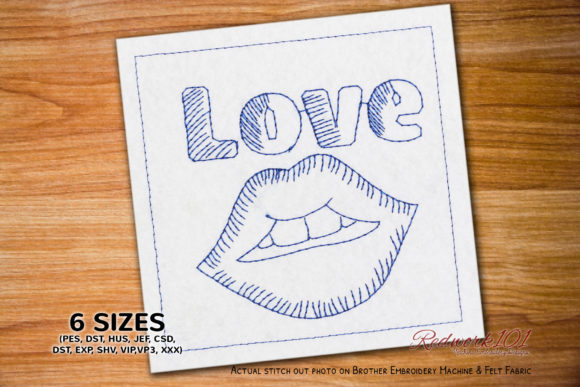
Love Lips Redwork: A Designer’s Honest Review
First Impressions and Visual Personality
When I first opened the Love Lips Redwork file, I immediately pictured it stitched onto a soft cream tote bag I’ve been saving for a small Valentine’s Day collection. There’s a quiet confidence in a lip motif done entirely in red thread — it leans romantic without feeling cluttered. The lines looked clean in my embroidery software preview, and the shape reads as a kiss mark instantly. For craft business owners, that kind of instant recognition is gold. Customer don’t pause to decipher the design; they feel the mood right away.
The design’s character is intentionally minimal. It’s all about suggesting affection through outline, not through shaded blends or overly complicated fills. The description mentions that the outer box stitch shown in some previews is optional and often appears in a different color. I really appreciate that flexibility. Skipping the box altogether turns this into a graceful standalone redwork lip — perfect for a classic vintage aesthetic. Keeping the box but using a muted neutral thread turns it into a little emblem that looks right at home on an apron pocket or a kitchen towel set.
From a designer’s eye, the proportion of the lips against the optional box matters a lot. In the preview I examined, the box didn’t crowd the lip shape; it left enough breathing room so neither element fought for attention. That sense of spatial balance is what separates a design that feels professional from one that looks like rushed clip art dumped into stitches.
Stitching Out the Design in a Real Project
I decided to run a test stitch on a standard cotton canvas tote bag. My goal was to see how Love Lips Redwork would hold up on a textured, slightly toothy fabric — the kind many Etsy sellers and craft fair vendors use for personalized gifts. I used a medium-weight cutaway stabilizer because canvas can shift under dense stitching, even though this is primarily a redwork piece with what looks like a combination of running stitches and light fill work.
The red thread I chose was a deep true red, not a cherry or orange-leaning shade. Against the natural cotton, the coverage felt intentional and crisp. There was almost no puckering around the lip outline, and the small details inside the lip curve stayed legible. That tells me the digitizer paid attention to stitch direction and density. When a lip curve collapses into a messy satin lump on a textured fabric, you lose all the sultry softness. That didn’t happen here.
I also stitched a second sample on a heathered gray sweatshirt fleece. This is the tougher test because fleece’s nap can swallow fine redwork lines. I added a water-soluble topper to prevent stitches from sinking. The result was clean, but I noticed that on the darker fabric, the red popped even more dramatically. If you’re planning a boutique apparel line with custom sweatshirt embroidery, this design will absolutely hold its own on light and medium-toned fabrics. On pure black, I’d test a slightly brighter red to avoid a dulled effect, but the stitch density seems tuned to work across multiple backgrounds.
Where the Design Truly Shines
Love Lips Redwork isn’t trying to be a massive jacket back piece, and that’s a strength. It feels purpose-built for smaller, intimate placements. Think chest-pocket corners on a linen blouse, the front of a baby onesie for a cheeky newborn photo prop, or the flap of a denim cap. The modest footprint also makes it a smart choice for embroidered patches. Satin stitch the outer edge or trim it neatly, and you have a kiss-shaped badge that sells itself as a Valentine’s Day patch set.
For personalized gifts, I can already hear the reaction: someone ordering a custom tote with the recipient’s initial beside these lips, or a tea towel stitched with “Love You” in a complementary script. Because the lip design isn’t overly detailed, it pairs beautifully with lettering without creating a heavy stitch area that stiffens the fabric. That pairing potential multiplies its value for a small shop product lineup — one design becomes five different SKUs with just a text change.
Baby embroidery projects also benefit from this lighter stitch style. Parents and gift buyers worry about scratchy backs on infant items. Redwork inherently leaves a softer reverse side compared to dense fill stitch designs. Paired with a soft no-show mesh stabilizer, the inside of a onesie remains gentle. That’s a practical selling point I always highlight when talking to customers.
The Optional Box and Thread Color Choices
The product description confirms that the outer box stitch is optional and frequently appears in a different color unless it’s part of the design itself. I’d advise any craft business owner to think through that choice before running a batch. If you’re building a whole Valentine’s Day product range, skipping the box on some items and keeping it on others adds visual variety without needing to buy a completely new embroidery file.
When using the box, avoid matching it to the lip red exactly unless you want a very monochromatic emblem look. A soft charcoal, muted gold, or even a pale blush pink can frame the lips beautifully and give the finished product a designer-brand feel. The fact that you can skip the box color entirely — just drop that thread stop from your machine — means this design adapts to your aesthetic without forcing you to commit to one presentation.
Projects That Need a Little Extra Care
As much as I enjoy this design, it isn’t a magic bullet for every surface. Stretchy performance fabrics like thin workout tees might distort the lip curve if you don’t hooping with meticulous care and a flexible backing. The curved nature of the lip line means any shifting during stitch-out will twist the pout into something unintended. Float the fabric if needed and always run a test on scrap before touching your final blank.
Very small hoop sizes deserve a second look too. While the design appears compact, check the stitch area dimensions. Some machines with a 4x4 inch max hoop may still fit this easily, but if you’re working with a 3.5x3.5 inch, verify the file’s exact width and height. The last thing you want is to buy a design only to realize it barely fits and the machine registration marks clip into the stitching space.
Corners on caps can also be tricky. If you’re adding this to a structured baseball cap, the lip’s horizontal shape may struggle to follow the sharp curve of the front panel seam. I’d test centering it slightly above the seam or on a flatter cap style, like a dad hat. Placement on a curved mug cozy or a zipper pouch with a lumpy interior pocket can also pull the outline slightly off, so test thoroughly before offering it as a custom option.
Frequent washing will eventually dull the delicate red thread coverage if you use a cheap polyester thread. Invest in a high-quality colorfast thread for items like kitchen towels or baby bibs that hit the laundry often. It protects your finished product and keeps your customer happy long-term.
How the Design Elevates a Small Shop Offering
From a brand consistency standpoint, Love Lips Redwork brings a signature motif that feels cohesive across multiple products. A pillow cover in the living room, a stitched apron at a bake sale, a hand towel in a guest bath — the repetition builds recognition. That’s what turns a one-time buyer into a repeat customer who knows your aesthetic.
In terms of buyer engagement, lip motifs are inherently shareable. Customers love posting Valentine’s Day gifts on social media, and a well-stitched red lip on a neutral bag photographs beautifully. I can see this design working especially well for styled flat-lays next to a candle or a chocolate box. If you’re creating printable mockups for Etsy listings, show the design on a blush background with the box option, then separately without the box on a classic linen texture. That small effort communicates versatility in one glance.
Professionalism often hides in the tiny details. The choice to make the box stitch optional shows that whoever digitized this thought about how embroiderers actually work. Not every project needs a frame. Not every thread color scheme includes a separate accent shade. That flexibility means you’re not fighting the design on your machine; you’re tweaking it to suit your own creative direction.
Designer’s Practical Checklist Before You Stitch
After running multiple tests, here’s what I’d want any fellow embroidery designer or small shop owner to remember:
- Test on scrap fabric first — always. Every machine, thread brand, and stabilizer combination behaves a tiny bit differently.
- Check thread color contrast on your intended blank. Red on warm cream feels nostalgic; red on stark white can feel clinical.
- Inspect stitch density in the preview software. If anything looks overly tight for your chosen fabric, adjust the file or plan extra stabilizer.
- Confirm hoop size and actual stitch area dimensions. Don’t guess.
- Look closely at small details — the lip corner and the philtrum dip (the little curve at the top) should remain sharp even at high speed.
- Test in black and white by removing thread color from your mockup. Strong redwork designs still read as a clear shape without relying on color.
- Compare light and dark fabric backgrounds to be sure the lip holds its visual weight on both.
- Use proper stabilizer for your fabric type. A tear-away might be fine on sturdy canvas, but a knit blank demands more support.
- Verify licensing terms before selling finished items or digital products. Most commercial embroidery files allow physical finished sales, but always double-check so your craft business stays protected.
One final thought for Etsy sellers and craft fair vendors: this design won’t just sit in your digital folder. Because the Valentine’s Day theme is timeless without being overly seasonal, you can list items year-round. A cheeky lip on a cosmetic bag sells in June just as easily as in February. That kind of evergreen appeal is what I look for when I add a new embroidery file to my working design library.
After using Love Lips Redwork on multiple blanks and watching how it behaves under real stitching conditions, I’d confidently recommend it to anyone who wants a refined, romantic motif that delivers a clean stitch without overcomplicating the production process. It’s a thoughtful addition to any maker’s collection, especially if you value designs that respect your fabric, your machine time, and your customer’s expectations.