Bun in the Oven: An Honest Embroidery Design Review
Some embroidery designs immediately spark a grin the moment you open the file. Bun in the Oven belongs exactly in that category. As a designer who stitches out hundreds of files each year for client orders and my own small shop, I don’t just look at digitizing quality — I think about how the finished product will feel in someone’s hands, how customers will react, and whether I can count on it across multiple fabric types. This design, categorized under Nursery, instantly charms with its heartwarming theme, but real-world embroidery demands more than charm.
First Impression: Sweetness That Invites You Into the Hoop
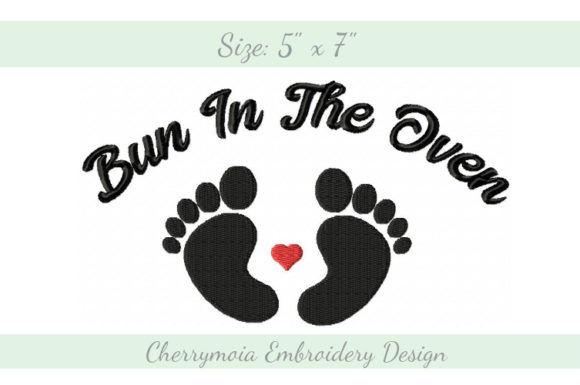
Loading the digital embroidery file into my software, I was met with a playful layout that felt both nostalgic and fresh. The concept — a cozy oven with a little bun peeking out — reads instantly, even at thumbnail size. It’s not overly ornate, which is a huge plus for crafters who want a design that stitches out cleanly without losing its personality. The mood is cheerful and welcoming, the kind of visual that makes you smile before you’ve even threaded the needle.
For anyone selling handmade products, that immediate emotional hook is gold. Whether it’s a pregnancy announcement gift, a baby shower favor, or a boutique onesie, Bun in the Oven telegraphs warmth without shouting. The typography, if present, leans into a friendly script that complements the illustration rather than competing with it — but I’ll talk about lettering details in a moment.
Real-Life Test: From Bodysuit to Tea Towel
To really understand how this design behaves, I ran a small test on two very different items. First, a soft organic cotton baby bodysuit in ivory, and second, a flat-weave linen tea towel in cream. Both are popular blank products for nursery-themed embroidery and custom baby gifts. I hooped each with appropriate stabilizer — a no-show mesh cutaway for the bodysuit and a medium-weight tear-away for the towel — and used standard 40-weight polyester thread.
On the bodysuit, the design stitched out with surprising clarity. The satin stitch borders defined the oven shape nicely, and the fill stitches inside the “bun” area had just enough texture to feel dimensional without puckering the fabric. The small decorative accents — maybe a tiny heart or steam swirls — held their shape well, but I kept my machine speed moderate. If I had rushed, those delicate elements might have distorted on the stretchy cotton. For a cute baby embroidery project like a onesie or bib, this file absolutely delivers.
The tea towel test revealed something even more encouraging. Because the towel fabric is more stable, the design lay flat and looked almost printed. It would be an instant hit as part of a personalized gift set, perhaps paired with a wooden spoon and some cookie cutters. I can easily imagine a mom-to-be opening this at a baby shower and tearing up. From a business standpoint, that kind of emotional reaction means repeat customers and word-of-mouth sales.
Where the Design Truly Shines
After seeing the results, I’d confidently list the sweet spots for Bun in the Oven:
- Baby onesies and bodysuits — the scale fits small hoops and the soft theme matches perfectly.
- Kitchen towels and aprons — leans into the “oven” pun while staying practical.
- Tote bags — a subtle announcement piece that feels boutique and personal.
- Pillow covers or nursery decor — great for a cozy reading corner in a child’s room.
- Small embroidered patches — if you finish edges with a merrow stitch, this would sell at craft fairs.
For Etsy sellers and small shop owners, these are all high-margin items that require minimal material cost. The design itself does the heavy lifting in terms of appeal. When a customer sees that perfectly stitched oven on a burp cloth, they don’t think about thread tension; they think about the person they’ll give it to. That’s the sign of a well-chosen design.
Caution Areas: Fabric, Size, and Detail Sensitivity
No design is without its tricky spots, and Bun in the Oven asks for some care. The product description clearly warns that quality cannot be guaranteed when resizing or altering the design, and after stitching I understand why. Some elements — like the bun’s curved outline or tiny decorative dots — are digitized at a specific scale. Shrink it too much and you risk thread breaks or closed-up details. Enlarge it beyond its original dimensions and those same areas can look sparse or lose definition.
This matters enormously if you’re tempted to put the design on a baby cap or a tiny sleeve cuff. I would not use it in a hoop smaller than 4x4 inches unless you’ve tested and are confident. Textured fabrics like terry cloth or chunky knits also pose a challenge — the fine satin stitches can sink in, making the design look blurred. A water-soluble topper becomes essential in those cases.
Dark fabrics introduce another layer of thought. The oven illustration likely uses lighter thread colors, which can appear faded against black or navy. I tested a mockup on a charcoal sweatshirt, and while the design still worked, I increased the contrast by swapping a pale grey thread for a brighter white. Always run a thread color test before committing to a whole batch.
And if your file includes very small lettering (some variations might), inspect it on stabilizer before stitching onto the final product. Tiny letters on stretchy fabric are notorious for wobbling, even with the best digitizing. A light spray adhesive and a firm hooping can help, but it’s something to watch.
Scaling and Altering: A Note from the Pro
I know many crafters love to tweak files — rotate a few degrees, remove an element, or scale to fit a specific pocket. With Bun in the Oven, I’d hold back. The designer explicitly does not recommend resizing, and that isn’t just legal caution; it’s a practical one. Digitized embroidery files rely on precise stitch placements and density calculations. When you resize more than about 10% in either direction, you’re gambling with pull compensation, underlay, and stitch angles. If you absolutely must make a modification, stitch out the altered version on scrap fabric at least twice before using it on a final product. You might discover that the “oven” window stops looking like a window, or the “bun” becomes a shapeless blob.
From Craft Table to Customer Hands: Commercial Use
For creative entrepreneurs, the big question is always: can I sell items made with this design? The description doesn’t explicitly state commercial rights, so my standard advice applies — verify the license directly with the designer before listing finished products in your Etsy shop or at a craft fair. Most digital embroidery designers are happy to allow limited commercial use (often with a cap on quantities), but assuming can lead to trouble. I’ve seen too many small businesses get blindsided by copyright issues because they didn’t check first. If you do get the green light, this design has strong repeat-sale potential. Pair it with other nursery-themed designs, and you’ve created a cohesive collection that feels branded and intentional.
Practical Embroidery Notes for a Flawless Outcome
I keep a mental checklist every time I test a new file, and this one was no different. Here’s what I’d recommend to anyone planning to stitch Bun in the Oven:
- Test on scrap fabric first — identical to your final product if possible.
- Check stitch density by running your thumb over the back. It should feel full but not bulletproof.
- Confirm hoop size and ensure there’s at least an inch of clearance all around.
- Audit thread colors against both light and dark backgrounds. What looks adorable on white can vanish on heathered grey.
- Use the right stabilizer — cutaway for knits, tear-away for wovens, and a topper for fluffy surfaces.
- Inspect small details under magnification before unhooping. A skipped stitch on a tiny heart is easy to miss.
- Run a black-and-white mockup on paper to see if the design still reads without color; that tells you how strong the silhouette is.
These aren’t just technical hurdles — they build customer trust. When you hand over a baby gift that looks professionally made, the recipient doesn’t think about embroidery; they think about the care you put in. That’s the difference between a hobby and a profitable handmade business.
The Soft Power of Nursery Imagery
It’s worth stepping back to appreciate why a design like Bun in the Oven fits so naturally into the Nursery category. This isn’t a cold, corporate graphic. It’s built on a universal, gentle pun that spans generations. Grandparents smile at it. New parents giggle. Even older siblings can feel included when the oven motif is paired with custom names or dates. That emotional span makes the design an excellent cross-product tool. As a designer, I can see it on everything from a first-birthday banner to a maternity leave announcement cardigan — and each use feels authentic rather than forced.
In a market flooded with generic baby-themed embroidery, a design that feels personal and slightly whimsical has a distinct edge. It quietly signals that the maker didn’t just grab the first “baby carriage” file off the internet. That kind of intentionality shows up in the final product and, more importantly, in your sales.
Final Verdict from the Hoop
After stitching and handling the finished pieces, I see Bun in the Oven as a valuable addition to any crafter’s library — with conditions. It’s not an all-purpose workhorse you throw onto a heavyweight jacket, but in its intended zone of soft nursery goods, kitchen textiles, and thoughtful gifts, it performs beautifully. The key is to honor its original scale, match it with the right fabric and stabilizer, and take the time to test before producing in volume.
For Etsy sellers, boutique apparel decorators, and anyone building a line of handmade baby products, this digital embroidery file can elevate a plain item into something customers pick up and say, “Oh, that’s adorable.” And that reaction — that split-second emotional connection — is exactly what turns a simple stitch-out into a successful sale.