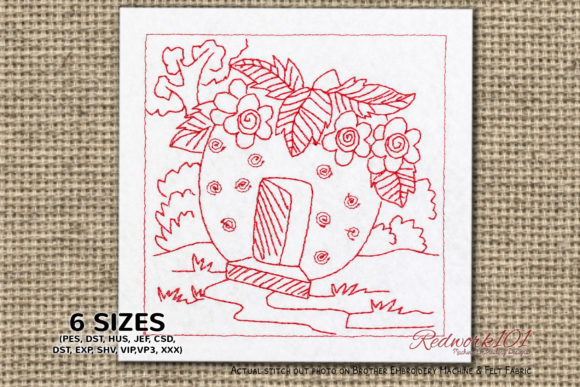
Fairytale Strawberry House Redwork Embroidery Review
As an embroidery designer preparing for a weekend craft fair, my first task is to evaluate which designs will translate into products that not only look beautiful but also sell. Today, I’m reviewing Fairytale Strawberry House Redwork. Based on the title alone, this embroidery file conjures a specific mood: whimsical, nostalgic, and distinctly charming. It promises a story—a strawberry as a tiny house—which is a wonderful hook for customers browsing a handmade market.
First Impressions: Whimsical Charm with Sales Potential
The immediate feeling of Fairytale Strawberry House Redwork is cute and decorative, leaning into a soft, storybook aesthetic. The "redwork" aspect suggests a classic, often single-color embroidery style, which can feel both rustic and premium depending on the application. This is not a bold, modern graphic; it’s a delicate, illustrative piece. For craft fair sellers, this mood is key. It appeals to buyers looking for something uniquely handmade, something with a touch of fairy-tale magic, especially within the Food category theme. It feels giftable and warm.
Product Application: Where This Design Will Stand Out
Visualizing my booth display—embroidered tote bags, aprons, tea towels, caps, and small pouches—I consider where Fairytale Strawberry House Redwork will shine. The illustrative nature means it works best as a focal point, not a tiny accent. Here’s my practical assessment for various craft fair products:
- Tote Bags & Market Bags: A single, well-placed embroidery on a natural canvas or linen tote would look excellent. The design tells a story, making the bag feel like a special, handmade item rather than just a utility product.
- Aprons & Kitchen Towels: Given its food-themed whimsy, this is a natural fit for kitchen textiles. On an apron pocket or a tea towel corner, Fairytale Strawberry House Redwork adds a decorative, personal touch that elevates a simple functional item.
- Pillow Covers: For a smaller throw pillow, this could be a lovely central motif, creating a cozy, cottage-core feel. It would pair well with natural, earthy fabrics.
- Embroidered Patches: This design could be excellent as a standalone patch, appealing to customers who want to add a unique touch to their own garments or bags. However, careful attention to stitch density and edges is needed.
- Caps & Curved Surfaces: Embroidering on caps requires designs that can handle the curve without distortion. The likely fine lines of this redwork might need testing on scrap fabric first to ensure clarity on a structured cap.
- Small Pouches & Giftable Items: Perfect. A small fabric pouch with this embroidery becomes a ready-made gift, ideal for fair-goers looking for a thoughtful, finished present.
Practical Production & Selling Considerations
Turning a digital embroidery file into a successful craft fair product requires thinking about production ease and customer appeal.
Production Speed & Batch Potential
The description states it “can be stitched without difficulty,” which is promising for batch production. For Etsy sellers and small shop owners doing pre-fair batches, a design that stitches reliably is crucial. I would, however, always advise checking the actual stitch count and density in the file. High-density areas on textured towels or thick fabric might require specific stabilizer choices. For consistent results, creating at least one real mockup on your intended fabric—say, a tea towel—is non-negotiable. This tests thread contrast, especially if using the classic redwork on a darker fabric base.
Photography & Online Listing Appeal
For those also selling online, Fairytale Strawberry House Redwork should photograph well. The illustrative detail and likely clean lines will show the handmade quality clearly. Using printable mockups for your Etsy listings can help, but a photograph of a real embroidered tote bag will always convey the texture and value better. The whimsical theme can also help with brand consistency if your shop focuses on charming, narrative designs.
Customer Attention at the Booth
At the fair, this design affects visual appeal and buyer engagement. It’s not a loud, graphic statement; it’s a piece that invites closer looking. Placed on a well-made apron among simpler items, it can create a point of difference, suggesting higher product value. A sample displayed prominently, perhaps on a pillow cover, can draw customers in to ask about the story behind the “strawberry house.”
Careful-Use Notes for a Professional Finish
Every design has its peculiarities. Here are my designer notes for applying Fairytale Strawberry House Redwork commercially:
- Small Details & Lettering: If the design includes tiny details or small lettering (like “Fairytale”), test it at your intended hoop size. These elements can lose clarity on textured fabrics like linen or if reduced too much.
- Fabric Color & Thread Contrast: “Redwork” typically implies a single color, but the thread color must contrast strongly with the fabric. On a dark bag, a classic red might pop beautifully; on a light towel, it will look traditional. Compare fabric swatches before committing to a batch.
- Stitch Density & Stabilizer: Review the file’s stitch density, especially in any filled areas. Dense stitches on a tea towel might require a firmer stabilizer to prevent puckering, affecting the final premium look.
- Hoop Size & Placement: Confirm the optimal hoop size from the file details. A design meant for a 4x4 hoop might not scale perfectly to a 6x10 area for a tote bag without looking sparse.
- Commercial Licensing: Always, always confirm your right to use the embroidery file for commercial embroidery and selling finished products. This is a fundamental step before any production begins.
Final Judgment for the Craft Fair Booth
Fairytale Strawberry House Redwork holds strong potential for handmade market products. Its whimsical, storybook charm targets a specific customer—one looking for warmth, nostalgia, and a handmade story. It’s likely more suited to products where it can be a central, appreciated detail rather than a small logo. For a summer fair, as the description notes, it could look great on summer outfits, suggesting applications on lightweight tops or market bags, aligning perfectly with the season.
My recommendation? Prioritize it on high-visibility, giftable items like tea towels, small pouches, and pillow covers for your booth display. Ensure your samples are impeccably stitched on quality fabric to maximize its perceived value. Test it thoroughly for production ease to ensure you can batch-create without issues. This design, when executed well, can become a quiet standout in your lineup, attracting customers through its charm and craftsmanship, ultimately boosting your booth’s strength and sales.