Heart Shaped Mandala Redwork for Boutique Apparel
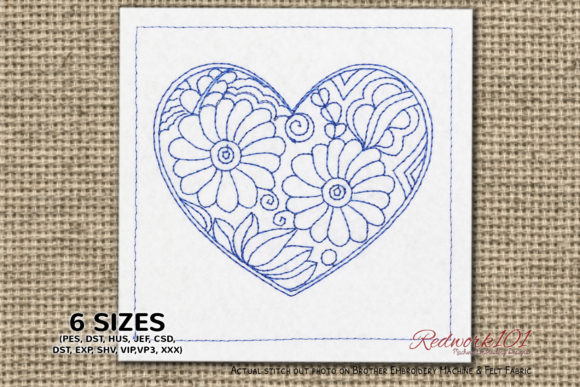
As an embroidery designer who builds small capsule collections for handmade clothing brands, I’m always scanning Creative Fabrica for machine embroidery designs that feel intentional, not generic. The moment I saw the Heart Shaped Mandala Design Redwork, I paused. It’s not just another heart outline. The redwork line style layered into a mandala gives it a handcrafted, heirloom quality that reads equally well on an oversized hoodie sleeve as it does on a structured tote bag. The visual personality sits at a rare crossroads: romantic without being frilly, detailed without feeling busy, and just rustic enough to feel like a boutique brand signature.
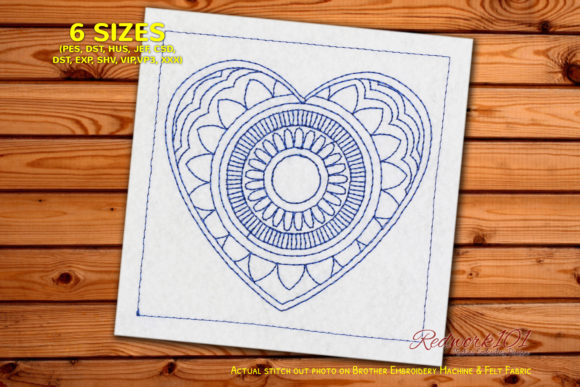
Redwork technique by nature leans on the beauty of a single thread color, and here that simplicity works in your favor. The heart is built from repeating floral-lattice shapes inside a clean outer heart boundary, so the mandala reads clearly even at smaller sizes. I also appreciate the note from Creative Fabrica that the box stitch shown in the preview is optional. That means you can keep the outer box as a framed graphic element, or skip it entirely for a softer, more organic edge that melts into the fabric — a thoughtful flex point that expands how I’d use this design across a clothing drop.
First Impressions and Visual Personality
This design immediately suggests a confident, feminine mood. Because the redwork aesthetic relies on fine connected strokes rather than solid fill, it avoids the heavy “patched-on” look that can cheapen a sweatshirt. Instead, it stitches like a delicate drawing that’s been embedded into the fabric. For boutique apparel, that’s gold. You’re selling feel as much as product, and Heart Shaped Mandala Design Redwork delivers a calm, elevated vibe — part bohemian, part vintage romance, part modern minimalism depending on your thread color choices.
I’d describe the decorative strength as medium-high. The mandala structure holds visual weight even on blank garment fronts, yet the open linework breathes enough that the design never overwhelms. If you stitch it in classic rich red on a cream or oatmeal sweatshirt, you get an instant cozy Valentine S Day drop piece. Change the thread to dusty mauve, soft sage, or slate blue, and the same design turns into a year-round staple that looks right at home on pastel hoodies, denim jackets, or neutral linen totes. The optional outer square box stitch, when used, gives a subtle patch-like frame, which is brilliant for oversized backs or tote bag centers. Removing it creates a floating heart mandala that drapes more naturally on curved body areas — essential for apparel decorators who think about fabric movement.
Ideal Apparel Applications for Small Batch Collections
When I plan a collection around a single embroidery motif, I map where that design will live across garments. The Heart Shaped Mandala Design Redwork works best as a chest placement on crewneck sweatshirts and hoodies, roughly 3.5 to 5 inches wide. At that size, the mandala lines don’t collapse into a blur, and you can still see the intricate inner petal loops clearly. Left-chest placement on t-shirts and lightweight knit tops feels equally intentional, especially layered under a chore jacket or open cardigan.
For hoodie designs, I’d also test this as a sleeve accent — the elongated forearm area on oversized hoodies can carry a 2.5- to 3-inch version beautifully. If you’re building a giftable loungewear set for a small shop, use the larger back placement on a zip hoodie, or center it above the kangaroo pocket on a pullover. The box stitch option is especially interesting here: a framed heart mandala on the back panel mimics a premium woven label aesthetic without the production complexity.
Beyond sweatshirt embroidery, here are the exact applications I’d line up in a product shoot:
- Slouchy casual sweatshirts in neutral oatmeal, dove gray, or blush
- Pastel hoodies for teen and young adult gift guides
- Dark apparel (charcoal, espresso, deep navy) with metallic gold or copper thread for boutique contrast
- Denim jackets with the design centered on the back panel, no box stitch for a free-floating mandala
- Canvas or waxed cotton tote bags — the structured fabric holds fine stitch detail exceptionally well
- Oversized t-shirts with a small heart mandala near the hem or sleeve cuff
Each of these placements ties back to a cohesive brand identity. Because the redwork line quality is so recognizable, customers spot your signature even when you shift garment styles. That visual consistency builds buyer trust fast, especially for Etsy sellers and social media-driven small shops where the lifestyle photo grid tells the story.
Fabric and Placement Considerations
Before loading the embroidery file, there are a few practical cautions every apparel decorator must respect. Designs with this much fine line work can misbehave on stretchy ribbed fabrics or highly textured fleece if you don’t nail the setup. Dense stitch areas, even in redwork, concentrate thread, and when that lands over a seam or on a curved body area that sees constant pull, you risk puckering or distortion.
Here’s where I’d be most careful:
- Small chest placements on stretchy knits: The mandala lines need a stable surface. Use a fusible cutaway stabilizer and float a topping film to keep the stitches from sinking into the fabric nap.
- Fleece garments: The loft in fleece can eat fine embroidery. A water-soluble topper is non-negotiable. If you skip the box stitch, the outer edge of the heart may lose definition on plush fleece, so test on an identical fabric scrap before committing.
- Dark garments: Redwork on black or deep navy needs high-contrast thread that doesn’t dull. A pure white, soft gold, or vibrant coral outperforms muted tones. Always preview thread against the actual garment color under natural light.
- Curved or off-grain surfaces: Avoid placing the heart mandala on a sharply curved seam, like the side of a hoodie body or the edge of a curved yoke. If the design bridges a seam, the alignment will fight you, and the mandala symmetry will look off.
- Tiny lettering or additional text: If you plan to pair this design with delicate script underneath, double-check the stitch density. Redwork mandala + tiny satin letters can compete for thread coverage and destabilize the fabric. Keep additional embroidery minimal and well-spaced.
I always test on a swatch that matches the garment’s fabric texture and weight, using the exact stabilizer and hoop size I’ll run in production. That mini investment saves destroyed sweatshirts and upholds the professional presentation your boutique brand depends on.
Increasing Perceived Value with Thoughtful Embroidery
Machine embroidery is one of the fastest ways to signal that an item isn’t mass-produced. The Heart Shaped Mandala Design Redwork does that heavy lifting because its mandala intricacy reads as detail-rich, yet the single-color execution keeps the production manageable. In product photography, that detail pops. It catches the light on soft fleece and adds tactile interest that flat prints can’t match. For printable mockups and Etsy listings, this design helps you justify a higher price point because the perceived effort is visible even in a still image.
Brand identity also benefits from the emotional cue of a heart motif, especially around Valentine S Day. But because the artistic mandala structure keeps it from being overtly childish or seasonal, you can carry the same design through spring capsules, bridal party collections, and even fall markets simply by rotating thread colors. Lay a vintage rose gold on a heather burgundy crewneck, and it becomes an autumnal romance piece. That adaptability is exactly what small clothing brands need to stretch product life and customer engagement.
When you use a cohesive embroidery file across multiple products — say, a left-chest hoodie, a matching tote, and a beanie with a smaller version — you build a mini collection fast. Your audience begins to recognize the signature redwork heart mandala as belonging to your label. That recognition loops back into buyer trust, repeat purchases, and word-of-mouth marketing that subtle, premium-quality embroidery naturally fuels.
Practical Embroidery Designer Notes Before Stitching
I treat every new Creative Fabrica embroidery file as a starting point, not a finished formula. Before running Heart Shaped Mandala Design Redwork on customer-facing apparel, I follow this checklist religiously:
- Test on scrap fabric that mirrors your final garment — same fiber content, weight, and knit structure.
- Choose your stabilizer wisely. For most sweatshirt and t-shirt blanks, a medium-weight cutaway backing plus a temporary spray adhesive gives the mandala lines the support they need.
- Match thread color contrast. Even if you love a tonal look, test it. The mandala relies on visibility of the fine strokes; tone-on-tone risks washing out the design completely.
- Confirm hoop size from the Creative Fabrica product details before purchasing. Ensure it fits the placement you’ve planned without distorting the garment.
- Inspect stitch density in your embroidery software. If the preset density feels too heavy for thin knits, adjust it slightly — but never drastically change the design’s integrity without a test sew-out.
- Test on the exact garment. A scrap is good, but a full garment test reveals how the design behaves around shoulder seams, kangaroo pockets, or ribbed cuffs.
- Compare placement options on a live model or dress form. What looks centered on a flat blank may shift once the garment is worn.
- Review the optional box stitch decision. Because the product description notes the outer box is a different color and can be skipped, evaluate whether the box frames your look or adds unnecessary rigidity. If you skip it, make sure your embroidery file is edited to remove those stitches cleanly.
- Check Creative Fabrica product details and licensing. Confirm available file formats match your machine, and verify commercial embroidery terms so you can legally sell finished products featuring this digital embroidery file.
Following these steps protects both your production timeline and the finished product quality your customers expect.
Where Heart Shaped Mandala Redwork Truly Shines
After years of testing motifs on boutique apparel, I know a design has staying power when I mentally slot it into multiple collections before I’ve even stitched the first sample. Heart Shaped Mandala Design Redwork earns that confidence. Its core strength is versatility delivered through an elegant single-color line structure, which means you get a high-impact look without complex color changes or thread trims slowing down production. The heart mandala aligns beautifully with Valentine S Day releases, bridal robe personalization, and any brand that leans into soft romantic storytelling — but it’s equally at home on streetwear-inspired oversized fits when stitched in stark black or neon on a washed-out tee.
For handmade business owners and Etsy sellers who print their own lookbook photos, this design also works wonderfully on digital printables and mockups. You can create a cohesive visual story before you’ve produced a single sweatshirt. Once the garments are embroidered, the real texture seals the deal with customers browsing your social media feed or website. The Heart Shaped Mandala Design Redwork offers that seamless bridge between digital presentation and tactile final product.
If you’re preparing a small boutique drop and want a design that speaks craft, care, and artistry, I’d put this on your shortlist. Just don’t skip the prep: test thoroughly, embrace the optional box stitch flexibility, and let the redwork lines do what they do best — turn a simple garment into a piece people want to keep for years.