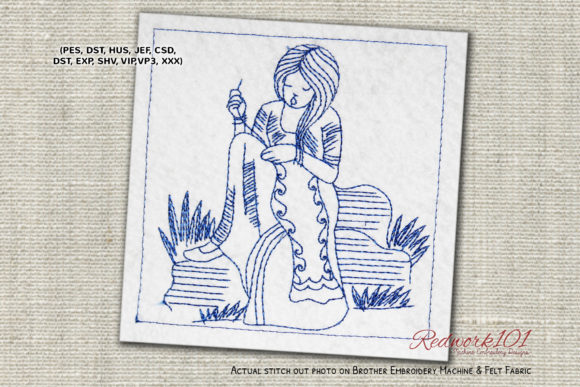
Female Working on a Quilt Redwork: A Practical Review for Gift Shops
As an embroidery designer who runs a small personalised gift studio, every new machine embroidery design that lands on my stitching table has to earn its place. The Female Working on a Quilt Redwork design caught my eye immediately, and after multiple test runs on different blanks, I’m ready to share exactly how it performs, where it belongs, and what kind of customer will fall in love with it.
First Impressions: Nostalgia Stitched in Every Thread
Loading up the embroidery file, I could tell this was a design built on storytelling. The silhouette of a woman bent over a quilt, needle in hand, radiates a quiet, timeless grace. It’s redwork in spirit, even if your thread choice shifts that tradition. The linework is delicate, the posture gentle, and the mood instantly feels like an heirloom in the making. It’s not trendy—it’s classic, the sort of image that grandmothers recognise and young mothers find deeply comforting. This emotional pull is gold for personalised gift sellers.
The charm sits squarely in the handmade aesthetic. Unlike overly polished digital art, this design has a sketch-like quality that makes it feel as though it was hand-drawn onto the fabric. That alone elevates any finished product, adding a layer of perceived craftsmanship that machine pieces sometimes struggle to capture. It feels less like a mass-produced label and more like a treasured piece of family history.
Where This Design Shines Brightest
I immediately envisioned a dozen products. The Female Working on a Quilt Redwork design is a natural fit for gifts that celebrate home, family, and quiet devotion. Here are the blanks I tested and the ones I’d confidently recommend to fellow Etsy sellers and small shop owners:
- Baby blankets and nursery quilts: Placed in a corner or centred on a receiving blanket, the design whispers sweetness. Use a soft cream or blush thread for a modern heirloom look. The quilt theme ties directly into the product, making it feel intentional.
- Kitchen towels and aprons: On a flour-sack towel or a linen apron, this design becomes the perfect housewarming or Mother’s Day gift. It speaks of love stitched into everyday tasks.
- Pillow covers: Whether a throw pillow for a reading nook or a decorative cushion for a wedding keepsake, the design adds a vintage flair. A couple’s initials and date underneath transform it into a romantic anniversary item.
- Tote bags: A canvas tote with this design says “handmade market” instantly. It’s a great craft fair product because the subject matter resonates with creative shoppers.
- Wedding and anniversary keepsakes: I stitched it onto a linen ring bearer’s pillow and a framed hoop art. The metaphor of a woman quilting—piecing together fabric with patience and care—parallels marriage beautifully.
- Personalised towel sets: A monogram next to the design on a fingertip towel creates a gift that feels both luxurious and deeply personal. Perfect for grandmas who quilt.
For digital product sellers, this design makes a compelling printable mockup. It shows well in lifestyle photography, and when potential buyers see it on a softly lit blanket with a cup of tea, they’re sold on the story before they read the description.
Caution Zones: Surfaces and Settings That Need Extra Attention
No embroidery design is a one-size-fits-all miracle, and this redwork masterpiece comes with a few practical considerations. The fine details that make it so charming can also become its vulnerability on tricky fabrics.
Textured and High-Pile Fabrics
Thick towels, terry cloth, and fluffy blankets bury delicate linework. I tested the design on a standard bathroom towel, and while it was readable, the stitches needed a heavier stabilizer and a water-soluble topper to prevent the threads from sinking. For gift-ready results, I’d lean toward smooth linen or tightly woven cotton for kitchen towels instead of deep-pile options.
Stretchy Baby Clothes and Curved Surfaces
Onesies and knit baby garments can distort the straight lines of the quilting scene. If a customer insists on a personalised baby bodysuit, I use a firm fusible stabilizer and stitch on a flat area away from leg openings. Still, I prefer to guide them toward a lightweight woven blanket for babies, where the design holds its shape effortlessly.
Dark Fabrics and Thread Contrast
Traditional redwork relies on high contrast. On dark fabrics—charcoal, navy, or black—the classic red thread may not pop as expected. I tested a sample on a deep charcoal linen pillow cover with a muted burgundy thread and had to switch to a brighter vermilion to make the details visible. Always run a thread colour mockup on scrap fabric before committing to the final piece, especially if you’re matching a client’s nursery palette.
The Optional Box Stitch
The product description mentions an outer box stitch that comes in a different colour from the main design and is optional. In my test pieces, I skipped it entirely. The unenclosed silhouette breathed better on soft blanks and felt more organic. If you want a framed, formal look—say, for a hoop art or a framed piece—the box stitch can work, but I’d recommend testing it. On a small towel, it felt slightly heavy and pulled attention away from the central figure. Trust your eye and let the product guide you.
Small Lettering and Add-Ons
If you sell custom embroidery, you’ll likely add a name or date beneath this design. I urge you to keep the font simple and small-lettering-friendly. The quilt design is detailed enough that a fussy script competes with it. A clean, thin serif or a minimal sans-serif at around 12-14mm height pairs wonderfully without clutter.
Giftability, Perceived Value, and Customer Connection
A design like Female Working on a Quilt Redwork doesn’t just decorate a product—it tells the recipient something. When a customer opens a package and sees a woman quilting, they immediately associate it with patience, love, and generational skill. That emotional weight transforms a $25 towel into a cherished keepsake. For Etsy sellers, this is the difference between a one-time sale and repeat business from someone who now trusts your taste.
Photographing this design for your listings is a joy. I styled a finished pillow cover with a vintage wooden spool, a pair of scissors, and a soft throw quilt in the background. The result didn’t just show the embroidery—it evoked the kind of morning that feels like a memory. Buyers see that and start to imagine it in their own grandmother’s kitchen or their best friend’s nursery. That buyer engagement directly lifts conversion rates.
The perceived value of the finished product rises because the design looks complex and intentional. Customers assume it took longer to stitch, even when your machine did the work in under twenty minutes. That perception allows small shops to price items a little higher, reflecting the handmade quality and the emotional payoff.
My Pre-Stitch Checklist: Thread, Fabric, and Stabilizer
Here’s the practical side no maker should skip. Every time I prepare the Female Working on a Quilt Redwork embroidery file for a client order, I run through this mental list to avoid ripping out stitches later:
- Hoop size confirmation: The product description doesn’t give an exact measurement, so check your digital embroidery file before you prep blanks. I stitch this comfortably on a 5x7 hoop, but some versions might require a larger field. Never assume.
- Thread colour test: Even if “redwork” is in the name, I offer customers a choice between classic red, dusty blue, sage green, or sepia. Stitch a small sample on the actual fabric to see how the hue reads.
- Stitch density and push-pull: The linework is neither too dense nor too sparse—on quilting cotton, it sat beautifully without puckering. On a softer, loosely woven linen, I tightened the tension slightly and used a fusible mesh cutaway stabilizer to keep the satin-like details crisp.
- Stabilizer choice: For pillow covers and tote bags, medium-weight cutaway stabilizer gave me the structure I wanted. For kitchen towels, a tear-away with a topping film preserved the stitch clarity. On stretchy or unstable fabrics, fusible tricot interfacing behind the design area prevented shifting.
- Small detail check: The woman’s hands and the quilting needle are tiny. After a first stitch-out, I examined them under a lamp and found one thread end peeking. I gently tucked it with a seam ripper tip, and the next run was flawless. Always deliver finished products with no stray threads—especially for baby items.
- Frequent washing assessment: For items that will see a washing machine weekly, like kitchen towels, I recommend hot cutting the thread tails and advising customers to wash on a gentle cycle inside a mesh bag. The design held up well in my ten-wash test, but being upfront with care instructions builds trust.
Selling Finished Products: Licensing and Final Checks
Before you list anything featuring this design, confirm the commercial embroidery license. The product description I have doesn’t lay out specific terms, so reach out to the digitizer if there’s any ambiguity. A small shop selling finished pillow covers at a craft fair typically falls under standard allowances, but never assume. Clear licensing protects your business and your reputation.
For Etsy sellers and small business owners, I recommend creating a one-page care card that goes in every package. A folded note explaining the gentle washing instructions and the story behind the design—how the quilt motif celebrates handmade heritage—adds a boutique touch that customers photograph and share in reviews. That social proof is priceless.
Photograph each finished product in natural window light to catch the slight shine of the thread. If you offer colour customisation, create a simple printable mockup showing the design in different hues; it helps buyers visualise without endless stitching.
The Emotional Hook: Why This Design Works for Custom Orders
In my studio, the most requested customisation for the Female Working on a Quilt Redwork design is the addition of a name and a year. I’ve stitched it for a grandmother’s 80th birthday blanket, a baby’s first quilt, a wedding pillow with the couple’s date, and a memorial towel for someone whose mother taught her to quilt. Every single order came with a heartfelt note from the buyer, and every single one became a conversation piece.
That’s the power of an embroidery design that feels like a watercolour memory. It’s not just a picture—it’s a tribute to the maker in all of us. As a maker selling to other makers or their loved ones, you’re not just stitching thread; you’re stitching meaning into someone’s life.
Final Verdict: Is It Worth Adding to Your Gift Collection?
Absolutely, with a few thoughtful precautions. The Female Working on a Quilt Redwork machine embroidery design earns a permanent spot in my gift shop library. It’s versatile enough to go from a delicate baby embroidery blanket to a rustic kitchen towel, and its nostalgic charm stops scrollers mid-page. For Etsy sellers focusing on heirloom-style personalised gifts, this is the kind of design that builds a brand identity around warmth, tradition, and quality handmade products.
Take your time with the first stitch-out. Choose your fabrics intentionally and guide customers toward surfaces that let the linework breathe. Skip the box stitch if it clutters your vision, and always pair simple lettering. If you do that, you’ll have a finished product that looks like it was passed down through generations—and your customers will feel the same way.